Tower Rush: Build, Multiply, Cash Out
Tower Rush is a crash-style casino game by Galaxsys. You stack a tower one block at a time, the multiplier climbs with every floor that lands, and the round ends the moment you press cashout — or the moment the tower comes down and the stake is gone.
 Read More
Table of Contents
Tower Rush in One Paragraph
Tower Rush is a single-player crash game wearing a construction skin, not a strategy title of the same name. You place a bet, a crane lowers the next block, and BUILD sets it on the tower. Every floor that lands nudges the multiplier shown beside the playfield; CASHOUT pays your stake times that figure and closes the round. Miss the landing and the tower collapses, settling the round at zero. Demo rounds are counted in FUN credits, so the mechanics cost nothing to learn, while real-money rounds at India-facing casinos are settled in rupees. Adults only, 18+.
What Players Say About Tower Rush
Five short notes from people who open the game regularly — demo only, small stakes and everything in between.
I spent a full week in demo before staking anything real, and that week told me something useful: my instinct is to build about two floors too many. Setting a target multiplier before the round starts turned this from stressful into something I actually enjoy.
Laura H.
Demo-first player
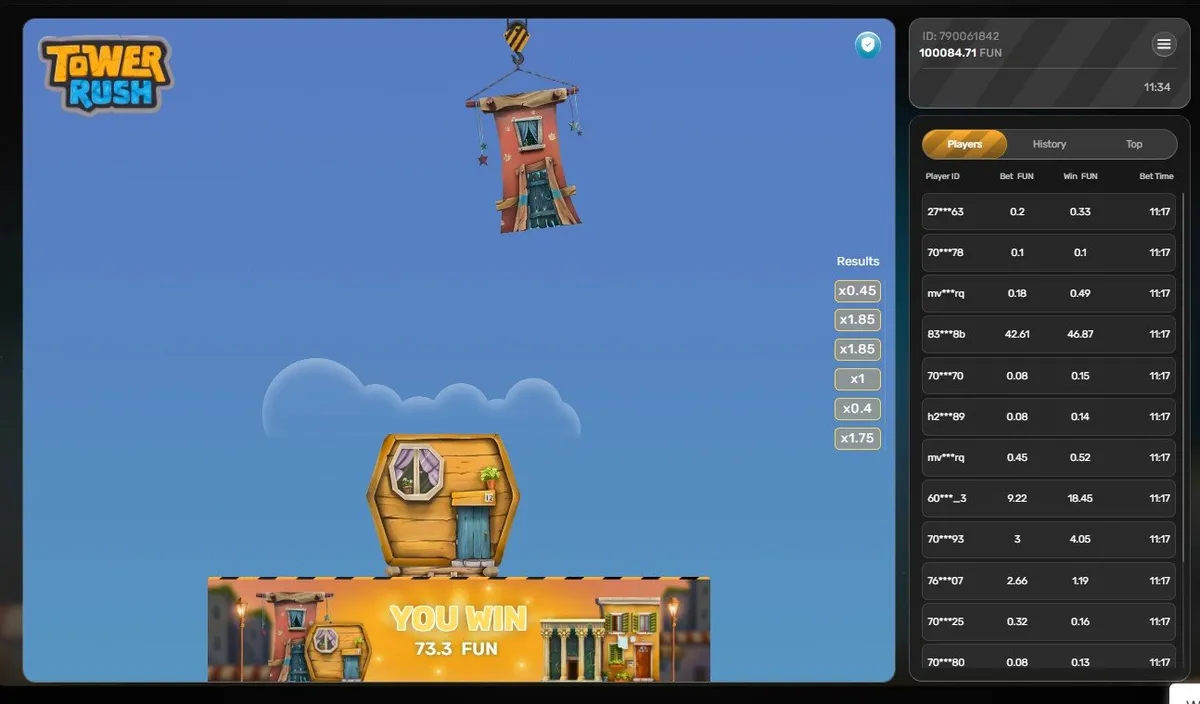
The results column on the right is the part I actually watch. A run of x1 finishes is a useful reminder that a tall tower is never owed to anybody.
Amanda C.
Low-stake regular
Rounds are small enough that a twenty rupee bet feels normal, which is why this is what I open on the train home instead of something slower.
Lisa V.
Casual player
Half a star off for the phone layout — I have fumbled the cashout button twice at a perfectly good multiplier, and that one is on the interface, not on me.
Kevin N.
Mobile player
A round is done in under a minute: set the stake, add a few floors, take the money. Nothing to wait for, nobody else's turn to sit through.
James T.
Short-session player
What a Tower Rush Round Looks Like
Build or Cash Out — There Is No Third Button
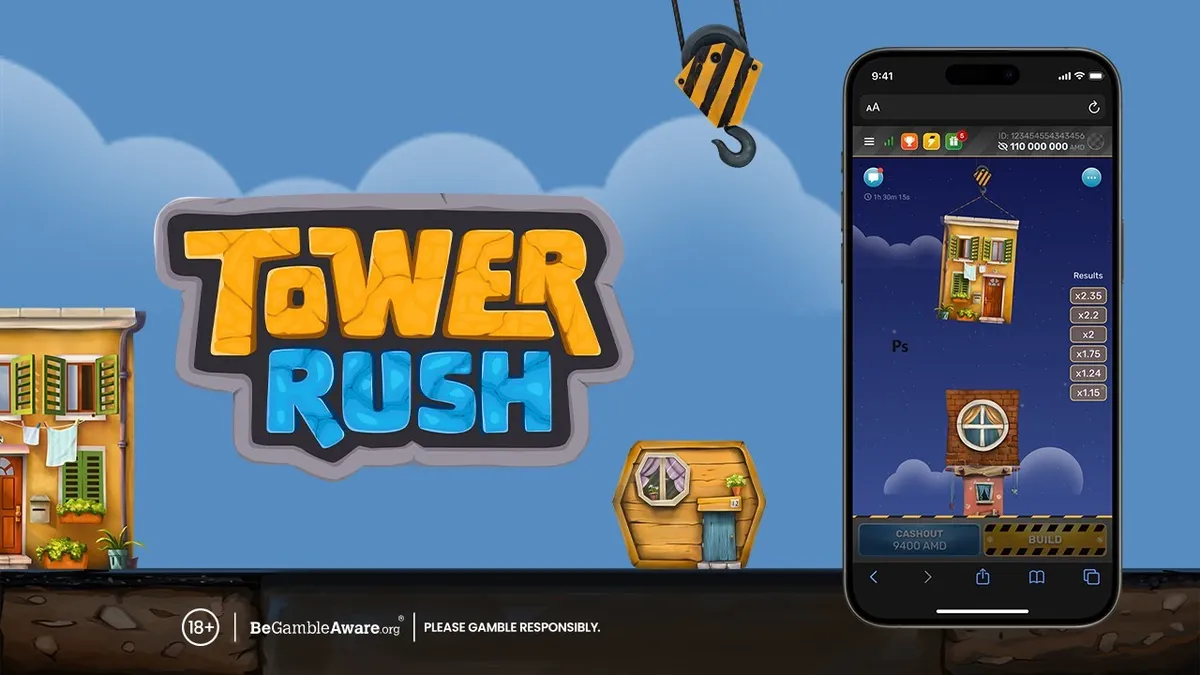
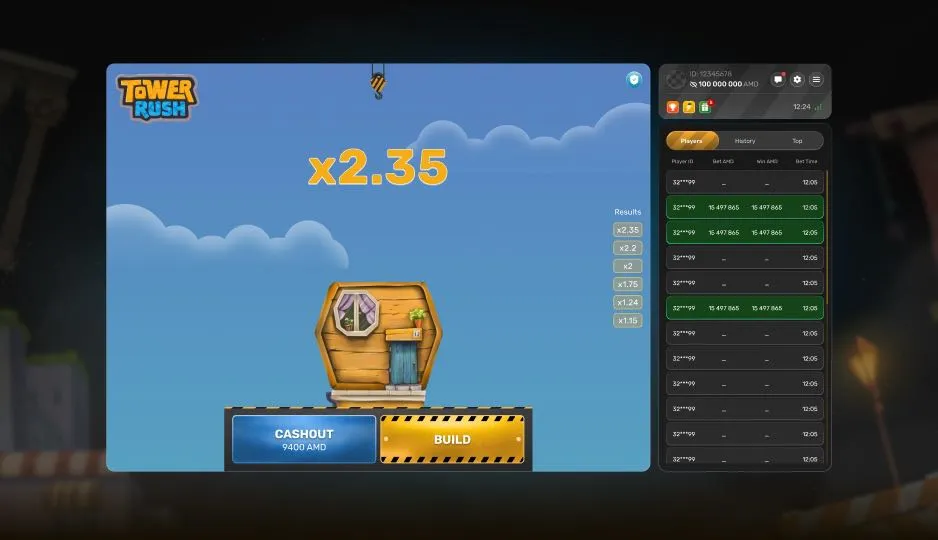
The mobile view puts the entire decision on one bar: a blue CASHOUT with the current payout printed on it, and a yellow BUILD that adds the next floor. Everything else on screen — balance, round timer, the column of past multipliers — is information, not a lever.
Plenty of Rounds End Flat
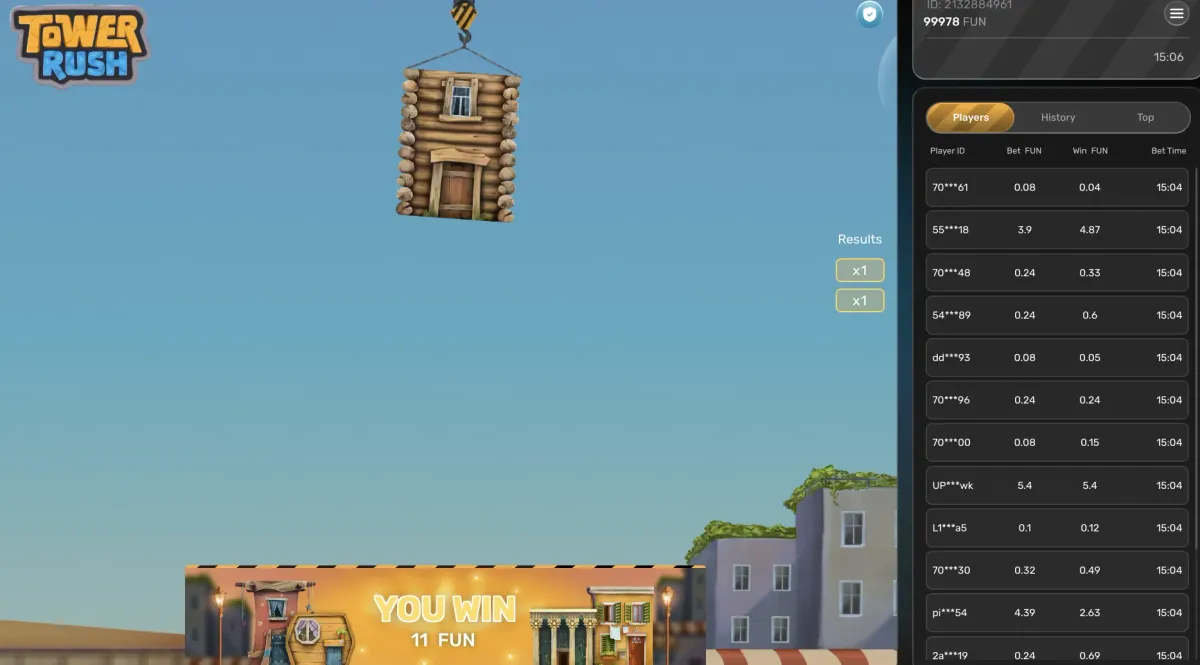
Two rounds in a row closed at x1 here, and the banner reads a payout of 11 credits on a stake of much the same size. Tower Rush is perfectly capable of handing back roughly what you put in, and the live bet feed beside the playfield shows how ordinary that outcome is.
New Block, Same Arithmetic
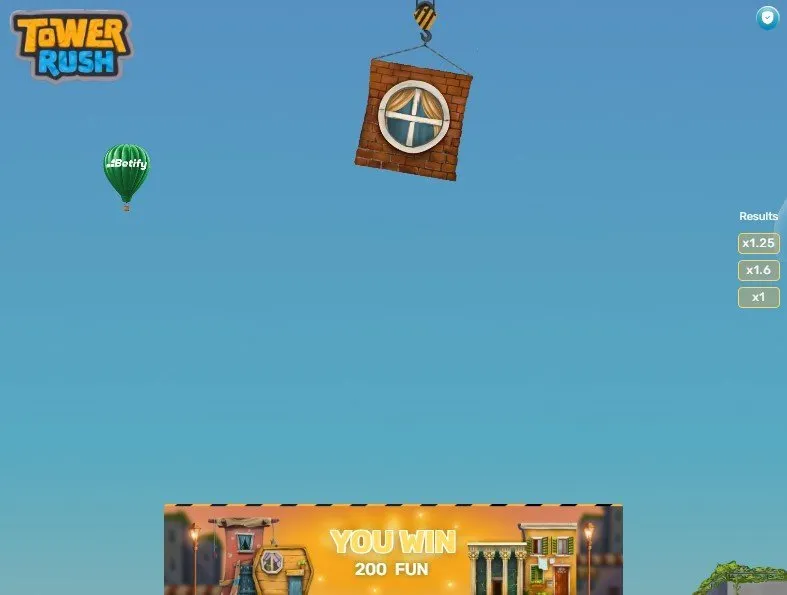
Brick, timber or plaster — the block art changes as the tower grows, the arithmetic does not. This round closed on a 200 credit payout after a x1.25, x1.6 and x1 sequence, the sort of modest run that fills most of the history panel.
Every floor asks the same question: is the next block worth the payout already sitting on the screen? Tower Rush simply makes you answer it out loud, once every few seconds.
How to Play Tower Rush, Step by Step
Four steps take you from a blank screen to a round you can actually plan. None of them needs a deposit to practise.
Open the Demo First
Load the game in FUN mode and play twenty rounds without touching your wallet. The balance is play money; the round logic and the paytable are the same ones the live version uses.
Set a Stake You Can Repeat
Pick a bet you would be comfortable placing thirty times in a row, not once. On India-facing sites the minimum usually starts around a handful of rupees and is printed on the bet panel before you confirm.
Decide the Cashout Before You Build
Name the multiplier you will accept — x1.8, say — before the first block lands. Deciding in the middle of a round, with the counter climbing and the crane already moving, is how a decent win turns into a collapsed tower.
Move to Real Money Only When Ready
Switching to rupees means a verified account, a deposit and identity checks. Set the operator's loss and session limits in the same sitting, before the first real round rather than after a bad one.
Why Tower Rush Plays Differently
Three traits that separate this from a slot and from the plane-style crash games sitting beside it in the lobby.
One Round, Under a Minute
There is no spin animation to sit through and no shared countdown waiting on other players. You open a round, build at your own pace and close it, which makes stopping after a fixed number of rounds genuinely easy.
The Multiplier Is Yours to Push
In most crash games a curve rises on its own and you race it. Here nothing moves until you press BUILD, so the multiplier only grows because you chose to grow it — and a collapse is always tied to your own last decision.
Free Practice in FUN Credits
The demo runs the same round logic on a play-money balance, so finding out where you tend to over-build costs nothing. It is the cheapest place to test a cashout rule you plan to use with real money later.
From First Demo Round to a Settled Routine
Most players arrive at the same four stages. Jumping straight to the fourth is where the expensive lessons live.
Learn the Two Buttons
Twenty demo rounds are enough to internalise what BUILD and CASHOUT do and how abruptly a tower can end. No plan yet — just hands on the controls.
Read the History Column
The strip of past multipliers down the right of the screen shows how often rounds finish close to x1 and how rare the tall towers are. Reading it kills the idea that a long run is somehow due.
Commit to a Cashout Rule
Pick one cashout target and hold it for a whole session instead of rewriting the plan every round. This is the stage where guessing turns into comparing.
Check Your Own Numbers
Note the stake, the target and the result for one session, then compare what you planned with what you actually pressed. The gap between those two columns is the only number worth improving.
FAQ
Six questions that come up before a first Tower Rush round — mechanics, fairness, apps and payments.
Set a stake, then press BUILD to place the first block. Each block that lands adds a floor and lifts the multiplier next to the tower. Press CASHOUT at any point and the round pays your stake multiplied by the figure on screen. If a block fails to land, the tower falls and the stake is lost. That is the whole game: no side bets, no bonus rounds, no opponents.
The multiplier starts low and climbs floor by floor — the game's own screens show steps such as x1.15, x1.24, x1.75 and x2.35 as a tower grows. Cashing out at x2 on a 100 rupee stake returns 200 rupees in total, stake included. Step sizes and the ceiling differ between operators and game versions, so read the paytable in the game menu rather than trusting a number from a guide.
Results come from the provider's random number generator rather than from the casino you play at, and licensed operators are required to run generators certified by independent test houses. Some builds also expose a provably fair panel with a round hash you can check afterwards; if your version has one, look for the shield icon at the top of the playfield.
A fixed cashout rule makes your results consistent, not profitable. Rounds are independent, so no string of past multipliers changes what the next block will do. Staking systems that double after a loss, Martingale included, only shorten the time it takes to reach the table limit or an empty balance.
The game runs in a mobile browser, which is how most players in India open it — nothing to install. Standalone APK files advertised as Tower Rush downloads do not come from the provider and are a well-worn route to malware and stolen casino logins. If an app is offered at all, take it from the licensed operator's own site.
Real-money play needs a funded account at a licensed casino; UPI and card deposits usually credit within minutes. Withdrawals run through identity verification — ID, proof of address, sometimes a check on the payment method — which is a licensing requirement rather than a stalling tactic. Finishing KYC before the first withdrawal request is what makes payouts quick.